
University of Salerno, Italy
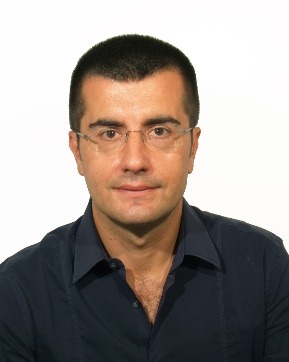
Francesco Basile received the Laurea degree cum laude in electronic engineering and the Ph.D. degree in electronic and computer engineering from the University of Naples, Naples, in 1995 and 1999, respectively. In 1999, he was a Visiting Researcher with the Departamento de Ingenieria Informatica y Systemas, University of Zaragoza, Zaragoza, Spain, for six months. He is currently Full Professor of Automatic Control with the Dipartimento di Ingegneria dell’informazione ed elettrica e matematica applicata, Università di Salerno, Fisciano, Italy. He has published over 130 papers in international journals and conferences. His current research interests include modeling and control of discrete event systems, automated manufacturing, and robotics. Prof. Basile is Associate Editor of IEEE Transactions on Automatic Control, and has been Associate Editor of the International Journal of Robotics and Automation, IEEE Transactions on Control Systems Technology, and IEEE Transactions on Automation Science and Engineering. He has been a member of the IEEE Control Systems Society Conference Editorial Board and is Associate Editor of IEEE Control Systems Letters. He has been the General Chair of the 14th International Workshop on Discrete Event Systems (WODES 2018), and the scientific coordinator of several research projects with private firms on industrial automation and control of material handling systems.
Speech Title: Discrete-Event Systems: From Modeling and Simulation to Control
Abstract: Discrete-event systems were introduced to study and describe man-made systems following the advent of digital technology. Indeed, reality evolves in continuous time, rather than through discrete events. The analysis of discrete-event systems was initially conceived to speed up the simulation of systems such as manufacturing systems. However, although discrete-event systems were introduced with practical objectives and applications in the real world, their application has subsequently raised significant challenges. This plenary talk aims to review the main applications of discrete-event systems, with particular emphasis on control and automation, and to provide an overview of the current state of the art.
University of Genoa, Italy
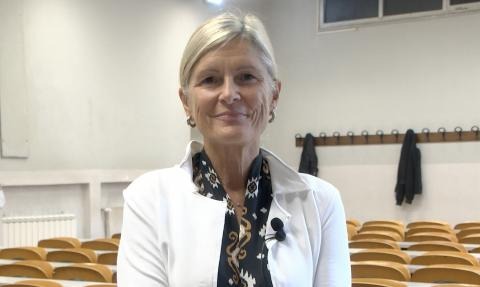
Simona Sacone is Full Professor of Automatic Control at the Department of Informatics, Bioengineering, Robotics and Systems Engineering (DIBRIS), University of Genoa, Italy. Her research interests include modelling, optimization and control of transportation and logistics systems, with particular emphasis on intelligent transportation systems, traffic networks and sustainable mobility. She is currently Editor-in-Chief of the IEEE Transactions on Intelligent Transportation Systems.
Speech Title: Physics-informed data-based techniques for freeway traffic modelling and control
Abstract: The presentation examines the evolution of traffic modelling, emphasizing the transition from traditional physics-based methods to contemporary data-driven techniques. Historically, traffic flow models were based on fundamental principles of physics, including the conservation of vehicles, the dynamics of their interactions with other vehicles and the road infrastructure, and vehicle motion equations. These models have proven effective in forecasting traffic conditions across various road networks. However, they can encounter challenges in accurately capturing the complexities, variability and stochastic nature that characterize real-world traffic systems.
With the rise of big data and machine learning techniques, a new paradigm has emerged: purely data-driven models and physics-informed machine learning models, the latter of which incorporate physical laws and domain-specific knowledge directly into the learning process. An innovative physics-based machine learning modelling framework will be presented and discussed. This framework has been tested on different real datasets and has been compared with purely physics-based and purely data-driven approaches.
Additionally, a control scheme that exploits predictions derived from the aforementioned modelling approach will be presented. In this instance, real-world traffic data have been employed to assess the effectiveness of the method, showing improved performance compared to traditional controllers.
Chalmers University of Technology, Sweden
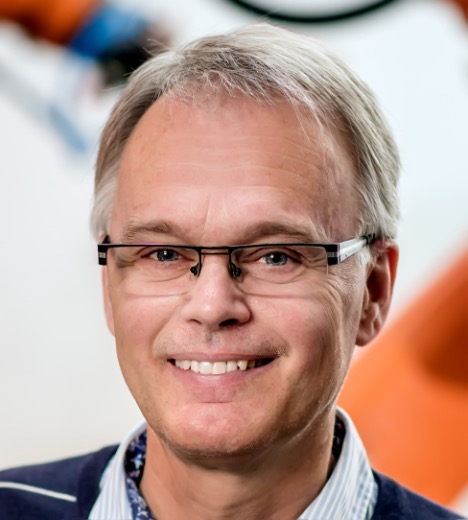
Bengt Lennartson received the Ph.D. degree from the Chalmers University of Technology, Gothenburg, Sweden, in 1986. Since 1999, he has been a Professor of the Chair of Automation at the Department of Electrical Engineering, Chalmers University of Technology, where he was the Dean of Education 2004-2007. He was the General Chair of the 11th IEEE Conference on Automation Science and Engineering, CASE 2015, and the 9th International Workshop on Discrete Event Systems, WODES’08, and he has been Associate Editor of Automatica and IEEE Transactions on Automation Science and Engineering. He is the (co)author of more than 300 peer-reviewed international papers, and his research is currently focused on discrete event systems, AI planning and learning, as well as sustainable production and robust feedback control. He is a Fellow of the IEEE for his contributions to hybrid and discrete event systems for automation and sustainable production.
Speech Title: Modeling, Learning, and Optimal Decision in a Unified Framework
Abstract: Different principles for modeling and specification of multi-agent systems are available, including automata, Petri nets, Markov Decision Processes, predicate logic, and game theory. An extended version of the temporal logic CTL* formalizes the relation and unification of these modeling paradigms. This includes efficient incremental abstractions, suitable for both formal verification and synthesis.
Optimal decisions for systems involving discrete variables often integrate methods from AI, operations research (OR), and constraint programming (CP). Google's OR-Tools has combined such tools with a satisfiability (SAT) solver. The basic principles behind this CP-SAT tool include its ability to find optimal decisions up to 1000 times faster than traditional MILP solvers.
Models involve parameters that can be learned based on data from real systems and complex simulation platforms. Suitable model structures depend on available knowledge, data efficiency, and robustness. This is especially crucial in reinforcement learning (RL), where different strategies are evaluated, including model-free, model-based, and deep RL, with optional safety guarantees.
Applications include planning, scheduling, and energy optimization. For robot systems, a non-standard RL strategy is shown to give up to 30% energy and 50% peak power reduction.